Want Real Privacy Without Making the Yard Feel Cookie-Cutter?
Wood gives Brooksville homeowners more flexibility around slopes, gates, and custom layouts.
Privacy styles • Flexible on grades • Natural appearance • Repairable sections
Serving Brooksville and nearby communities

WOOD FENCE INSTALLATION
Wood gives you familiar privacy with room to make the fence fit the yard.
Wood is usually the fence people picture when they talk about making a backyard feel private. It can be simple and straightforward, decorative, shadowbox, board-on-board, or built to follow a yard that is not perfectly flat.
That flexibility is the reason wood is still popular. It can solve odd corners and changing grades without making the entire property feel manufactured. It also lets you replace individual boards when normal wear shows up.
Wood does need routine care. Around Brooksville, full afternoon sun, summer rain, sprinklers, and shaded damp spots can weather different parts of the same fence at different rates. Staining or sealing and occasional board repairs help keep the fence looking cared for.
WAYS TO USE WOOD FENCING
Wood fencing that looks like it belongs on the property
Traditional backyard privacy
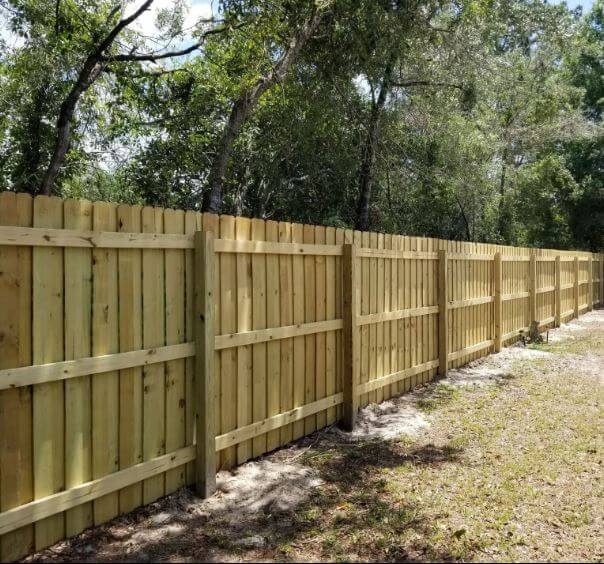
A solid wood fence makes a backyard feel more settled and usable. It blocks the direct view from neighboring yards and gives patios, play areas, and dogs a defined space without the uniform look of a manufactured panel.
Shadowbox and neighbor-friendly styles
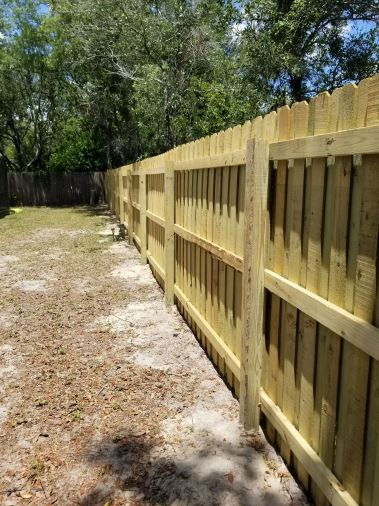
Shadowbox and alternating-board layouts add texture and airflow while still providing substantial screening. They can be a good fit when both sides of the fence will be seen or the yard needs privacy without feeling completely closed.
Custom sections, slopes, and awkward corners
Wood can be adjusted around changing grades, tighter side yards, trees, and transitions between materials. That flexibility is useful when a standard panel system would leave an odd step, a large bottom gap, or a clumsy corner.
Call for a Fence EstimateWood privacy styles for different yards
A wood privacy fence blocks the view, softens sound a little, and creates a defined outdoor room around a patio, pool, or backyard. The board pattern and top line can keep it from looking like one long blank wall.
If only one side of the yard needs screening, say so. You may be able to use wood near the living area and a more open material elsewhere. The layout should solve the actual privacy problem instead of automatically fencing every side the same way.
Planning for grade, gates, and the finished side
Wood can follow gentle slopes or step across stronger grade changes. Talk about how the bottom gap will look, especially if the fence is meant to contain a small dog. Gate width and support matter too because a heavy wood gate will sag if it is treated like an afterthought.
Many jurisdictions and HOAs care which side faces outward. Neighbors may care even when the rules are silent. Settle the finished-side question before installation rather than after the fence is already standing.
Simple care helps wood keep its good looks
Wood naturally changes color and weathers outdoors. A good stain or sealer, reasonable drainage, and keeping sprinklers from constantly soaking the boards can help the fence stay attractive longer.
Many homeowners choose wood because the natural look is worth that occasional care. The benefit is a fence that can be refreshed, repaired one board at a time, and adapted as the property changes.
DETAILS THAT CHANGE THE FINISHED JOB
Wood fence details that change how the finished yard feels
Two wood fences can use similar boards and still look very different. The board pattern, top line, posts, gates, and the way the fence follows the ground all show in the finished job.
Privacy styles do not all feel the same
Traditional side-by-side boards create a familiar solid screen. Board-on-board gives more overlap as the wood naturally moves, while shadowbox fencing adds airflow and a finished appearance from both sides. Looking at a full section is more helpful than choosing from a close-up sample.
The frame behind the boards matters
Posts, rails, fasteners, and the way each section is supported determine how straight and solid the fence feels. Ask what is behind the pickets, how the posts are set, and how long runs are handled when the yard changes direction.
A wood gate needs its own support plan
Wood gates are heavier than they look. Width, frame design, hinges, latch placement, and the supporting post affect how well the gate stays aligned. If the opening needs to fit a mower or trailer, plan it as a working gate instead of an oversized walk gate.
Sun, sprinklers, and soil affect the same fence differently
One side of a yard may stay damp while another takes full afternoon sun. Keeping sprinklers from soaking the boards and allowing water to drain away from the posts can help. When the wood has had time to dry, the installer can explain when a stain or sealer makes sense.
When another material may work better
Vinyl is the main comparison when you want full privacy with less maintenance. Chain link is more practical when the goal is a secure dog area or a longer boundary without blocking the view.
Other services include vinyl fencing, chain link fencing, aluminum fencing, farm and agricultural fencing, commercial fencing, and automatic gate installation.
For local details, use the page closest to the property: Brooksville, Weeki Wachee, Ridge Manor, Spring Lake, Dade City, or Wesley Chapel.
Wood fence questions homeowners ask
The practical questions about care, uneven ground, repairs, dogs, and the finished side.
How often does a wood fence need to be stained or sealed?
There is no single schedule for every fence. Sun exposure, sprinklers, drainage, wood type, and the finish used change how quickly it weathers. Inspect the surface and follow the product guidance.
Can a wood fence be installed on uneven ground?
Yes. Wood can follow a grade or step down in sections. The best approach depends on the slope and the bottom gaps you can accept.
Is wood fencing good for dogs?
A solid wood fence can reduce visual triggers and create a secure yard. Height, digging, loose boards, bottom gaps, and gate latches still need to match the dog.
Can one damaged board be replaced?
Usually, yes. Individual pickets and some rails can often be repaired without replacing the entire fence, depending on the condition of the posts and surrounding wood.
Should the finished side face my neighbor?
Local or HOA rules may require the finished side to face outward. Even when they do not, it is worth discussing the appearance with the installer and neighbor before work begins.
Is wood cheaper than vinyl?
Wood often costs less upfront, but maintenance and repair costs matter over time. Compare the complete ownership picture, not just the first proposal.
Want a wood fence without guessing through the details?
Tell us how much privacy you want, what the yard is like, how many gates you need, and whether an old fence has to come out first.
Call 352-675-2165