Need to Secure the Property Without Slowing Down the Workday?
Plan vehicle access, deliveries, screening, and secure areas before choosing the material.
Property boundaries • Equipment areas • Controlled access • Vehicle gate planning
Serving Brooksville and nearby commercial properties

COMMERCIAL FENCE INSTALLATION
Start with access and security, then choose the material.
Commercial fence projects usually have a specific job: protect equipment, define a boundary, control vehicles, separate customers from work areas, or make an entry point easier to manage. The best material depends on which of those jobs matters most.
A storage yard may need visibility and a strong gate system. A customer-facing property may care more about appearance. A dumpster or equipment enclosure may need screening without blocking the space required for trucks to maneuver.
Operating hours, deliveries, emergency access, parking flow, and future expansion should be part of the first conversation. A fence can be secure and still become a problem if the gates sit in the wrong place.
COMMERCIAL FENCE USES
Commercial fencing that supports the way the property operates
Property and storage-yard boundaries
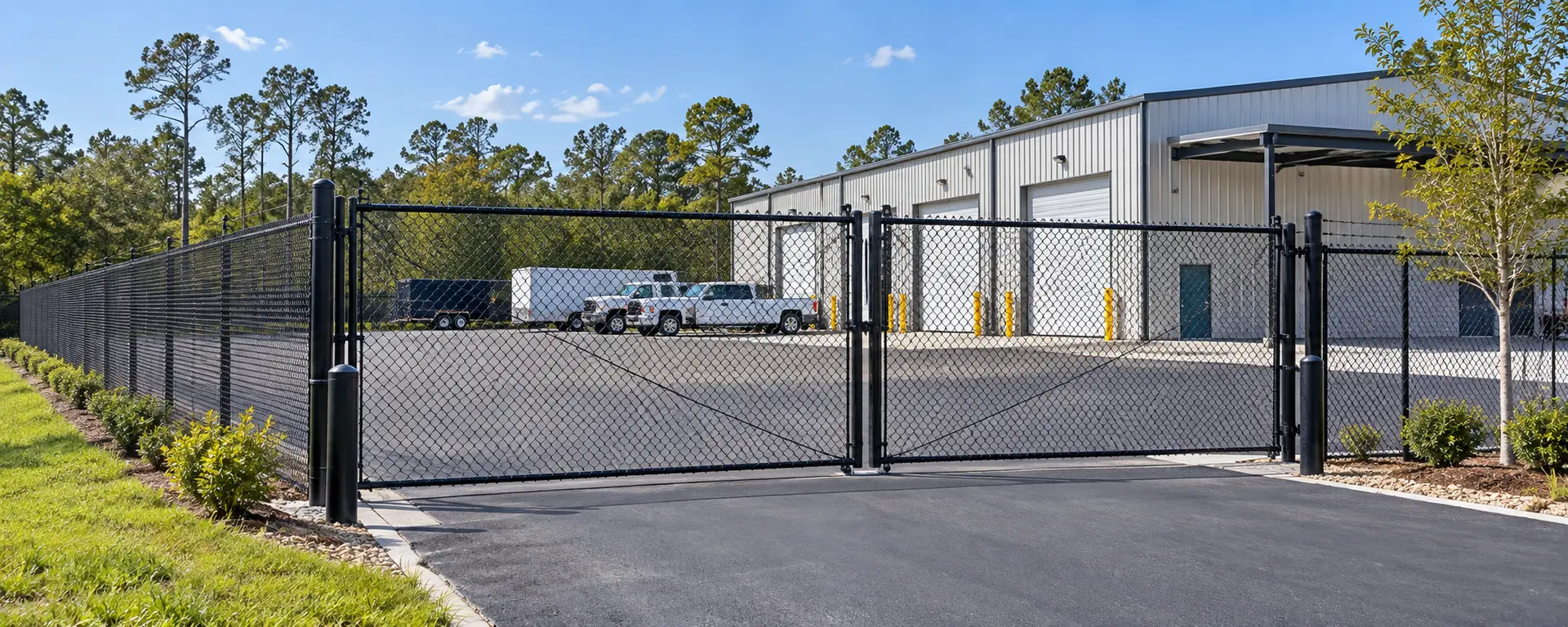
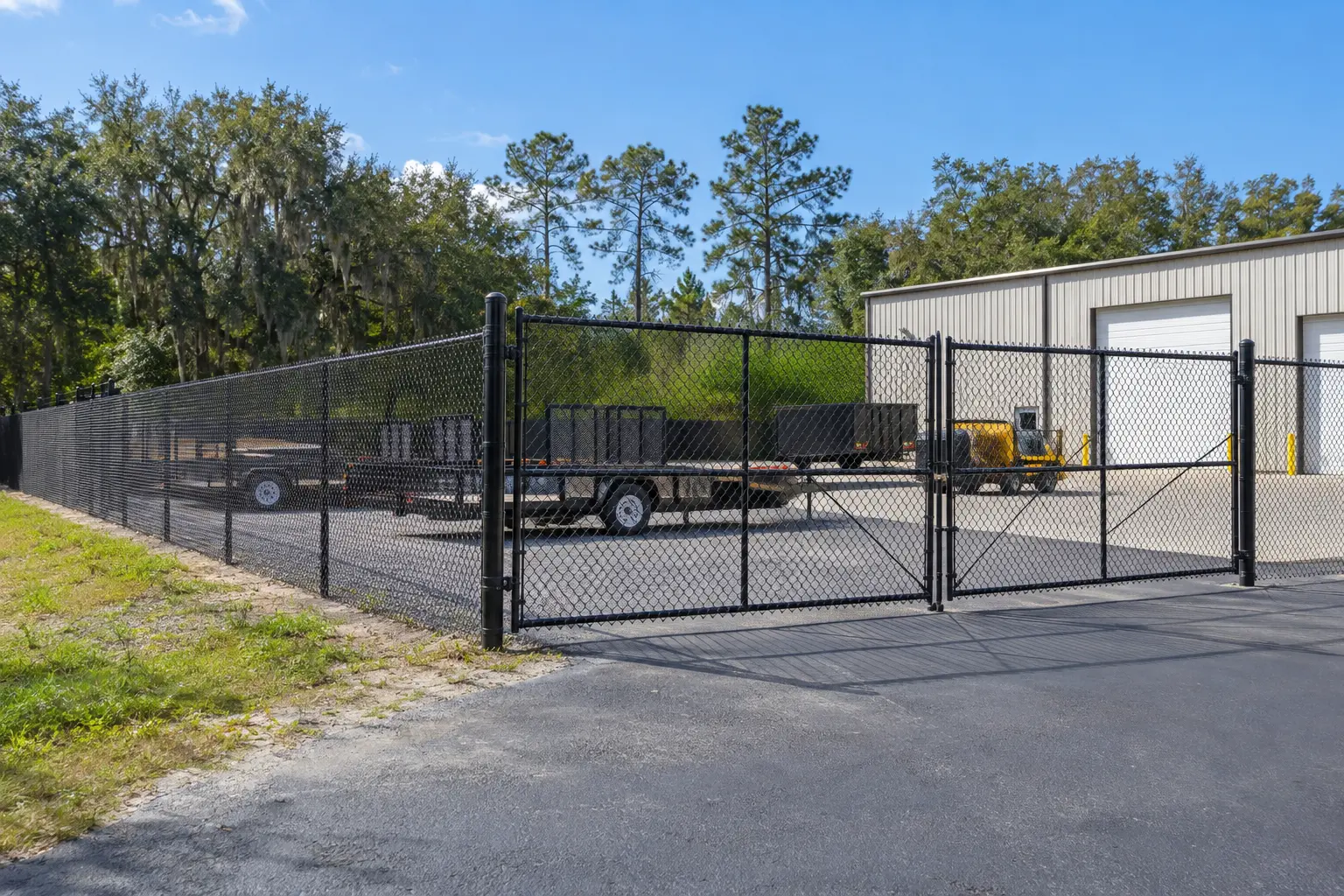
Chain link and other commercial systems can define the site while keeping equipment, inventory, and activity visible. Height, fabric, posts, and gates are selected around the level of control the property needs.
Screening for equipment and service areas
Wood, vinyl, or screened fencing can soften the view of dumpsters, outdoor storage, and mechanical areas. The layout still needs to leave enough room for pickups, deliveries, maintenance, and emergency access.
Vehicle and employee access
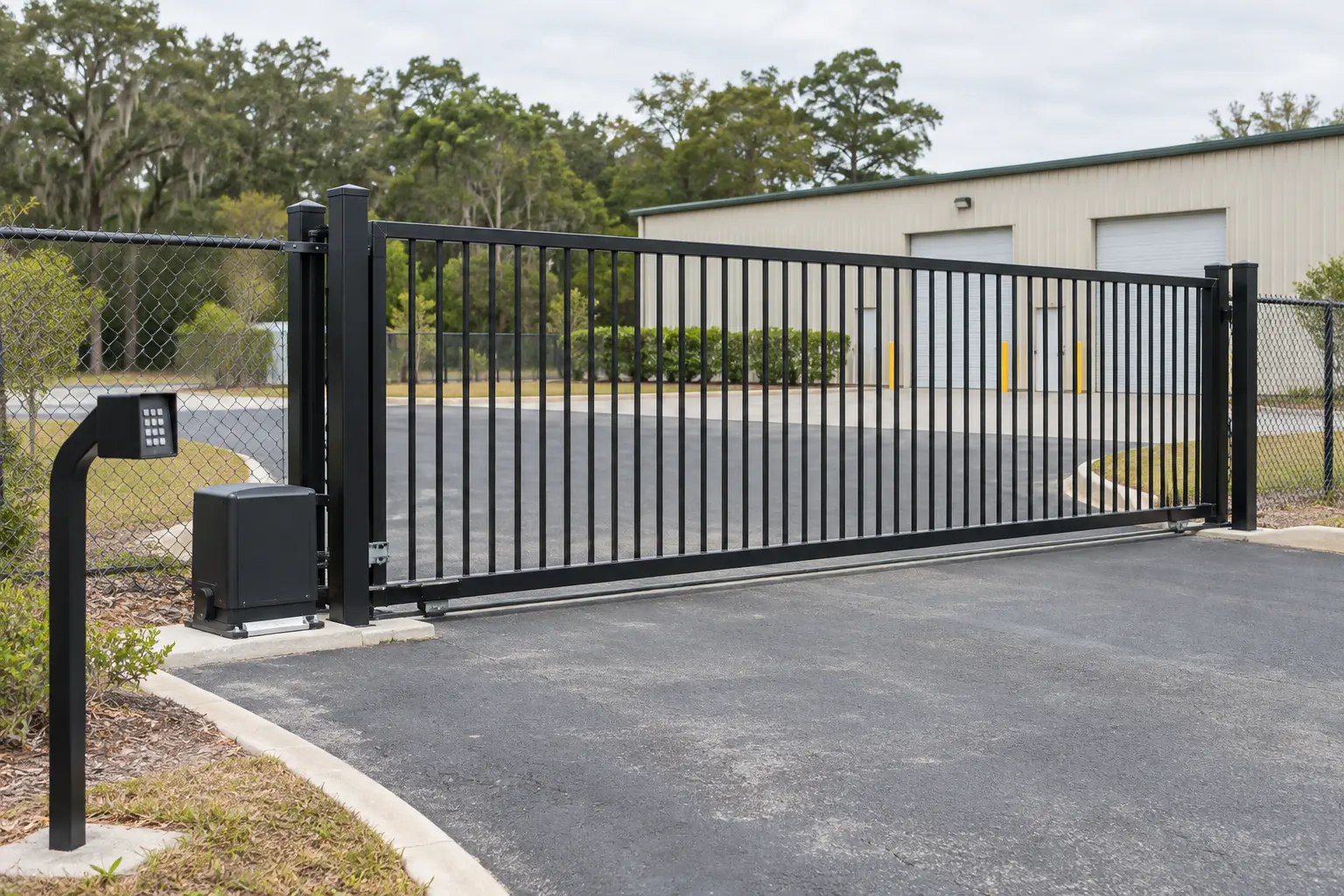
Manual or automatic gates can organize entry points for staff, vendors, and service vehicles. Opening width, turning room, daily traffic, and after-hours access belong in the plan before the fence line is finalized.
Call for a Fence EstimateChoose the fence around the daily operation
Chain link is common for storage, equipment, utility, and service areas because it keeps the property visible while creating a clear secure boundary. Privacy slats or solid panels may be added where screening matters, but wind and access need to be considered.
Aluminum can fit customer-facing areas where appearance matters. Wood or vinyl may work for screening around offices, outdoor areas, or equipment, as long as fire access, visibility, and maintenance fit the property.
Gates usually decide whether the fence feels useful
Measure the widest service vehicle and look at turning room on both sides of the opening. A gate can be wide enough on paper and still be difficult for a trailer or truck to use because of the approach.
Decide who needs access, how often, and whether the gate will be manual or automatic. Keypads, remotes, timers, smartphone control, and other access options belong in the plan before the posts and power route are finalized.
Avoid disrupting the business twice
Talk about delivery windows, customer traffic, employee parking, noisy work, temporary access, and which parts of the property can be blocked at one time. A clear installation sequence matters on an active site.
If old fencing or gates are being replaced, decide when they come out and how the property stays secure during the change. That is especially important around inventory, animals, equipment, or after-hours areas.
ACCESS AND SECURITY PLANNING
Questions worth answering before a commercial fence is laid out
The fence should make the property easier to manage. A short walk through daily traffic, deliveries, blind spots, and the after-hours routine usually shows where the gates and screening belong.
Start with what needs to be protected or separated
Equipment, outdoor inventory, employee parking, customer areas, dumpsters, utility equipment, and vehicle entrances do not all need the same fence. Naming the real concern keeps the project from becoming one long boundary that misses the important spots.
Measure the vehicle and the turn, not just the opening
A truck or trailer can fit through a gate and still struggle to make the approach. Measure the widest regular vehicle, then look at the road, parking spaces, curbs, and room on the inside. Roadside ditches and narrow drives can change where the entrance should sit.
Screening should not create a new visibility problem
Solid panels and privacy slats can hide equipment or service areas, but they also change wind load and sight lines. Near parking lots, drive aisles, and road entrances, keep the view needed for safe movement while screening the areas customers do not need to see.
Know what must stay open during installation
List delivery times, employee entrances, customer routes, fire access, and the hours when noisy work is least disruptive. If an old fence is coming out, decide how the site stays controlled until the new fence and gates are ready.
Materials and gate options to compare
Chain link is often the practical commercial choice. Aluminum works where customers see the fence. Automatic gates deserve their own planning when vehicles, staff, or after-hours access are involved.
Other services include vinyl fencing, wood fencing, chain link fencing, aluminum fencing, farm and agricultural fencing, and automatic gate installation.
For local details, use the page closest to the property: Brooksville, Weeki Wachee, Ridge Manor, Spring Lake, Dade City, or Wesley Chapel.
Commercial fence questions
Straight answers about security, access, scheduling, gates, screening, and old-fence removal.
What fence is common for commercial security?
Chain link is common because it provides visibility and can be configured for height, gates, and controlled areas. The right system depends on the property and security goal.
Can installation be planned around business hours?
Often, yes. Discuss operating hours, deliveries, customer traffic, and areas that cannot be blocked before scheduling.
How wide should a commercial gate be?
Base it on the widest vehicle or trailer plus its turning approach. Fire, delivery, and service access may also affect the opening.
Can commercial fencing provide privacy?
Yes. Solid wood or vinyl, screened enclosures, or some chain link privacy options may work depending on wind, maintenance, and site requirements.
Can an existing manual gate become automatic?
Sometimes, but the gate, posts, hinges, travel path, power, and safety equipment need to be evaluated before adding an operator.
Should old fencing be removed as part of the project?
Discuss removal, disposal, temporary security, and the installation sequence in the proposal so the business is not left exposed unexpectedly.
Tell us how the commercial property operates.
Share the location, security goal, vehicle access, gate use, operating hours, old-fence removal, and any areas that cannot be blocked during installation.
Call 352-675-2165